Websites for renovation and interior design
Show your work, how you work and how to book a visit with you. Before calling you, clients want to see that you know what you’re doing.
 Jaume Pérez SentísWeb developer in Barcelona
What it usually needs
- Finished jobs with before and after photos, explained: what was there, what was done and how long it took.
- How you work, step by step: visit, design, quote, works and handover.
- What you do and which area you cover, so you don’t get calls for things you don’t do.
- A simple way to book a visit: phone, WhatsApp or a form that asks only what’s needed.
- Who’s behind it: the team, the trades you work with and, if you have them, your reviews.
What’s included and what’s extra
We work out the details around your business, and you get it in writing, fixed, before we start.
What I include
- Structure and copy organised with you: home, projects, how we work, the studio and contact.
- Mobile-friendly design, careful and fast even with lots of photos.
- Project pages you can add to, with their photos, the before and after and how long it took.
- A visit request form that asks only what’s needed: what to renovate, the size and when suits them.
- Call or WhatsApp button and the area you cover.
What is quoted separately
- Visit requests from the website going straight into your diary or management software. Adding their booking link is included.
- A 3D flat like the one in the demo, modelled from a project’s plans.
- A private area where clients follow their project: photos, reports and documents.
It depends on what you already use and on what you want to change yourself. We decide it before the quote.
What’s yours
Your website’s address (the domain) and the place where it’s stored (the hosting) are in your name and you pay for them; the quote tells you what they cost per year. You keep the website and all the passwords. If you ever want someone else to look after it, you take the whole thing with you.
After delivery, you look after it or, if we agree on it, I do: keeping it running, the changes you need and the backups. No lock-in.
What it could look like
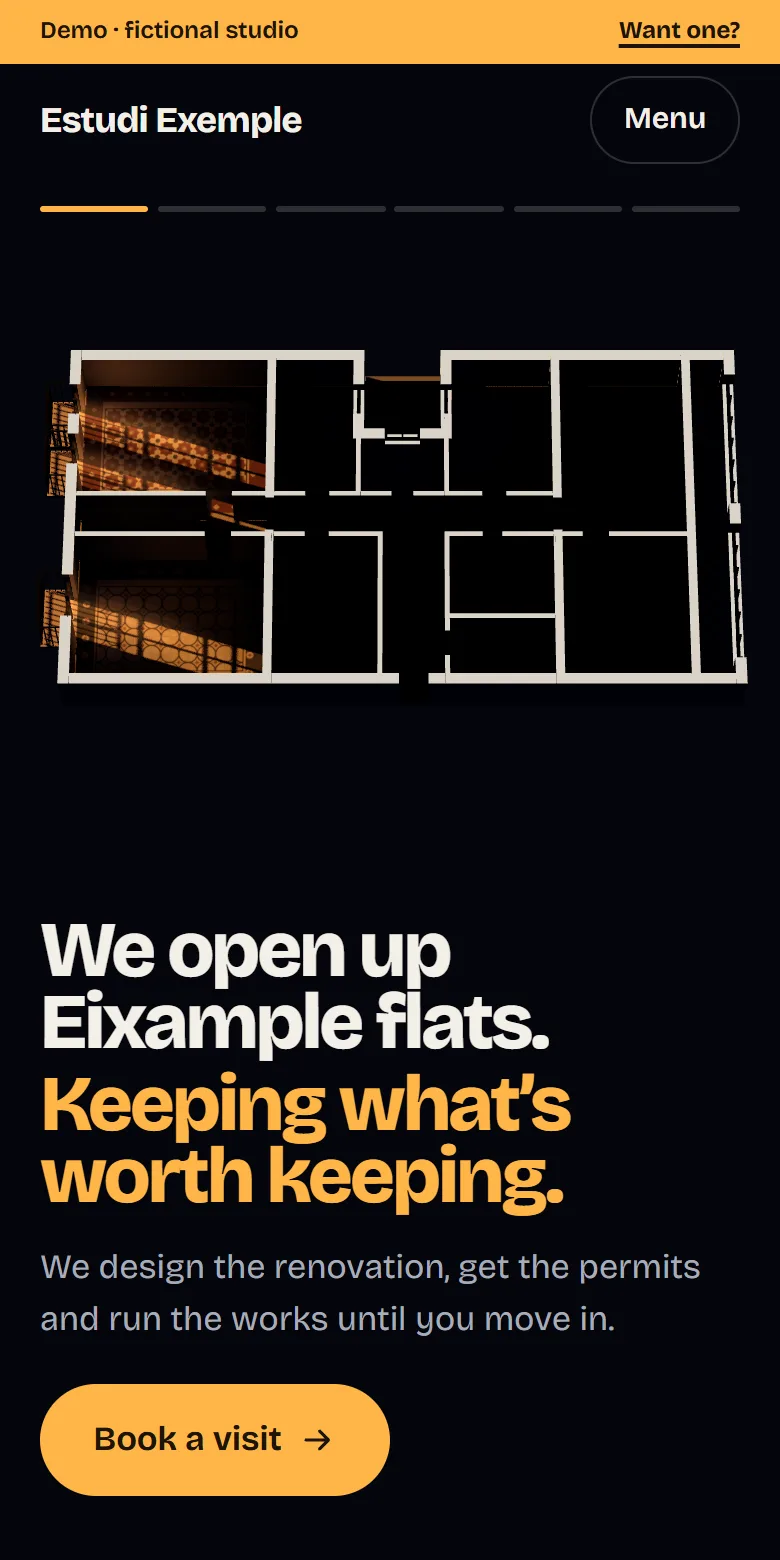
A demo with a made-up interior design studio: an Eixample flat in 3D that gets renovated as you scroll down the page, from night to day, with what the client decides at each stage, how the studio works and a sample visit request that sends nothing.
A real studio’s website would show photos of its work. The 3D flat and a visit request connected to your diary are quoted separately; in the demo, the visit request sends nothing.
See the demo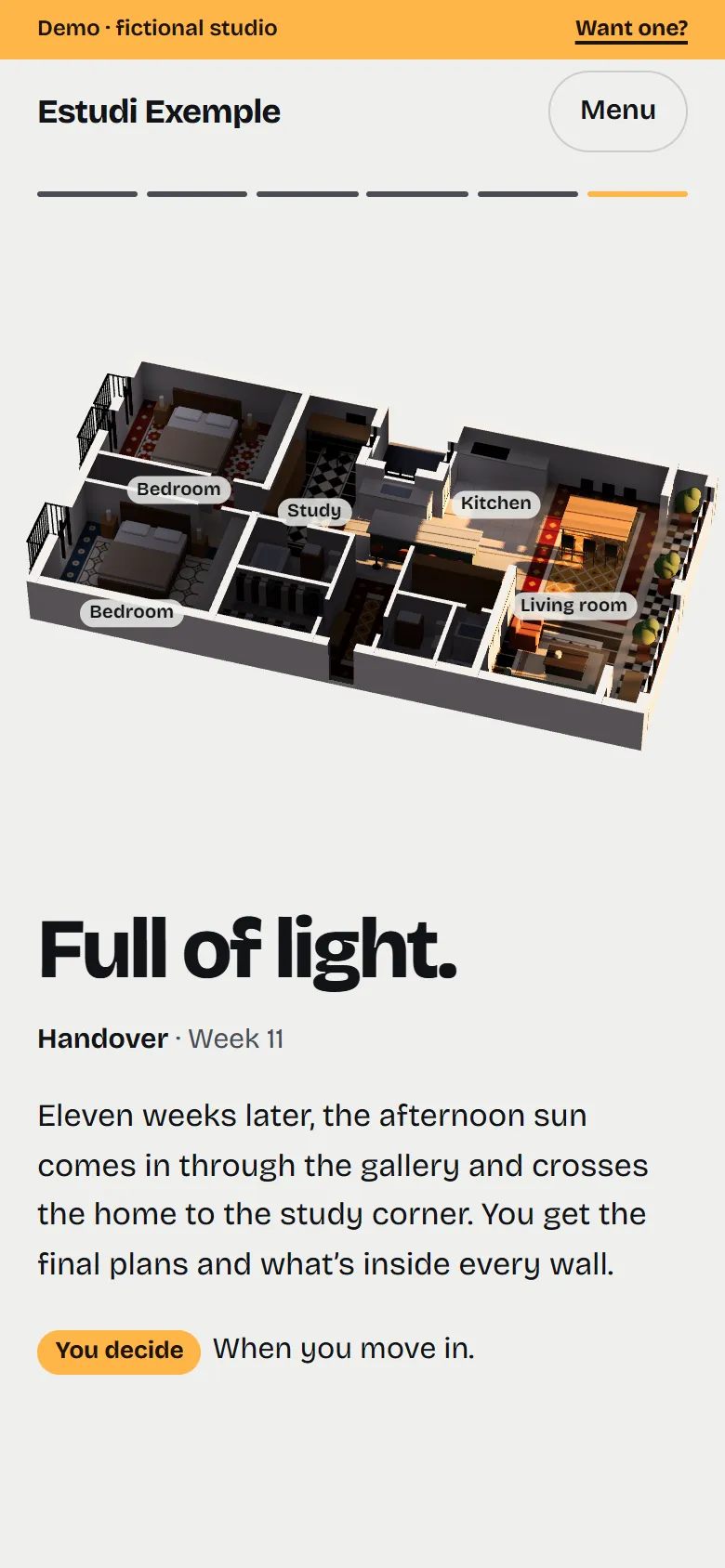
Common questions
How much does a website like this cost?
The simplest is a single page with your projects, how you work and how to request a visit. From there, it depends on what it includes: how many pages, whether the copy and photos exist or need preparing, and whether you want to edit the text yourself, bookings or a catalogue. I give you a fixed price in writing before we start, and asking doesn’t commit you to anything.
What if I don’t have good photos of my work?
You start with what you have. For the next jobs, take photos before you start and when you finish, from the same spot: a simple before and after convinces more than a stock photo.
Can I add projects myself?
Yes. At the start we choose how: from a template you fill in to a panel where you upload photos and text. The easier it is for you, the more work it takes, and that shows in the quote.
Do I need the 3D from the demo?
No. It’s there to show how far it can go. For most studios, good photos and well-explained projects are enough, and they cost less.
Do you run a business like this?
Tell me what you have now and what you’d like to achieve. I’ll reply with the next steps and, if it fits, a written quote.
Tell me about your projector message me on WhatsApp